
Parts and Accessories Waivers
Over the past few years over a dozen waiver applications have been filed with the Federal Motor Carrier Safety Administration (FMCSA) with regards to lighting, mirrors, and warning devices. The most common involve lighting, and specifically what lamps are displayed when the brakes are applied. Eight waivers have been approved for motor carriers that have installed a device made by Intellistop.
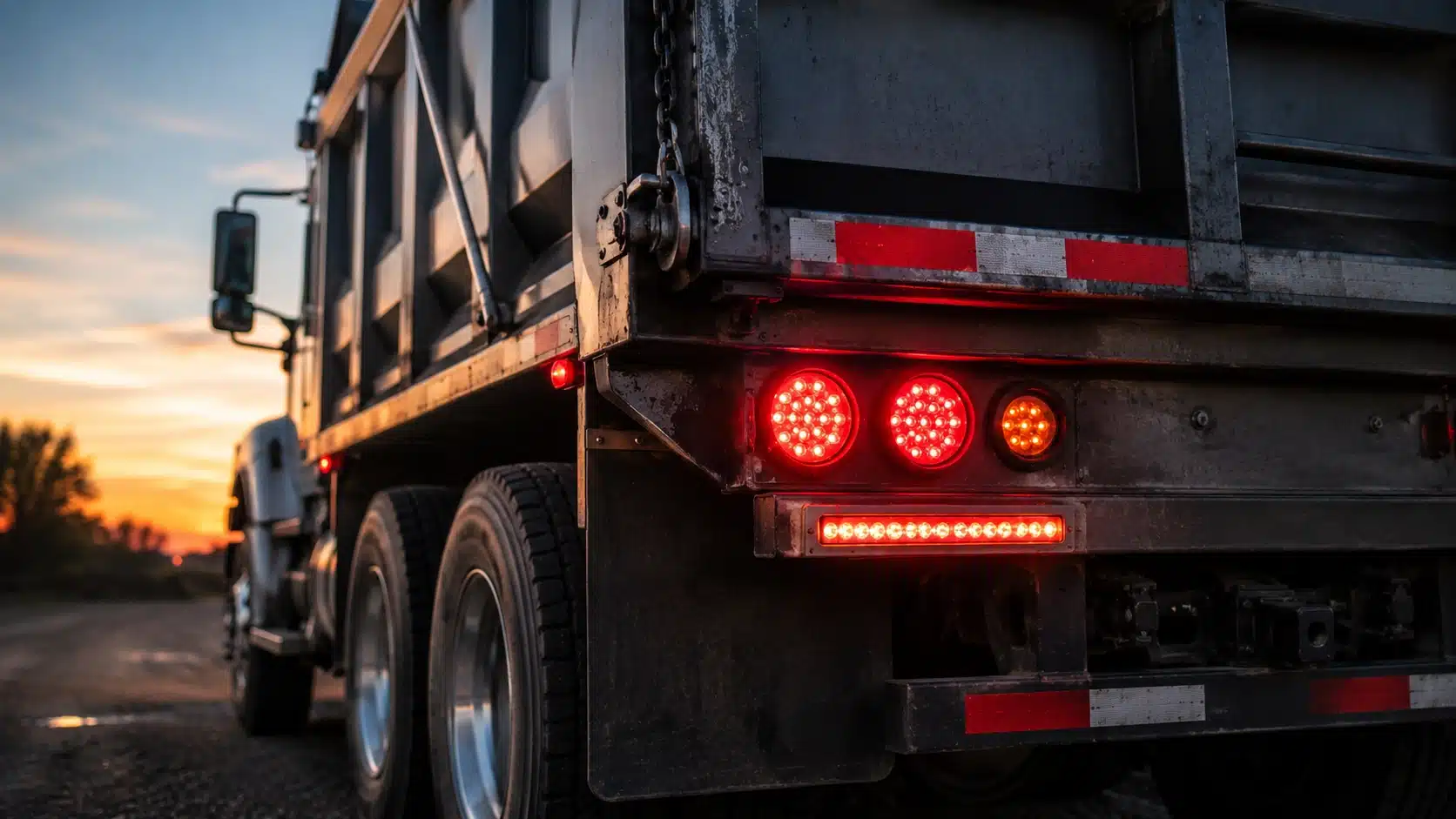
The Intellistop module is designed to pulse the required rear clearance, identification, and brake lamps from a lower-level lighting intensity to a higher-level lighting intensity four times in two seconds when the brakes are applied and then return the lights to a steady-burning state while the brakes remain engaged. Previous research has demonstrated that the use of pulsating brake-activated lamps increases the visibility of vehicles and should lead to a significant decrease in rear-end crashes. Motor carriers that have an Intellistop waiver are required to provide rear-end crash data to FMCSA.

Another device is a third brake light mounted in the upper position which pulses amber when the brakes are applied and then becomes steady red. The first waiver for this device was granted to the National Tank Truck Carriers association. They were looking for a way to decrease rear-end accidents associated with tank trucks slowing and stopping for railroad crossings. Since then, several other waivers have been granted. One application was from Grote Industries, a truck light manufacturer. This waiver was for van body trucks and trailers and contains mounting specifications. Waiver recipients are required to work with FMCSA to collect rear-end crash data.
ROSHO Automotive Services has applied for a waiver so that its camera-based “Mirror System” can be installed as an alternative to the two rear-vision mirrors required by the regulations. According to ROSHO, its system provides safety benefits that include an expanded field of view, enhanced image quality, fail-safe system design, and reduced driver fatigue. Five other waivers have been granted for similar products by other manufacturers.
Pi Variables has been granted a waiver so that its Sequential Flashing Road Flares can be used in place of the standard warning triangles. Each warning device is illuminated by an array of LEDs which, combined with other warning devices, provide four different options to adjust the flash pattern: two sequential, one simultaneous, and one with steady burn. A carrying case and two different options to power the LED flares are provided: lithium-ion rechargeable batteries or AA alkaline batteries.
The Texas Transportation Institute (TTI) investigated motorists’ understanding of various designs of LED flares and their perceived usefulness in a simulated work zone at night. Results from the study showed that the flashing LED flares used in the work-zone lane closure were perceived positively and were not confusing to the motoring public. The field study also found that the prototype LED flares encouraged motorists to vacate a closed travel lane farther upstream from the work zone. FMCSA feels that Pi Variables’ LED flares may provide similar safety benefits alerting drivers to a stopped vehicle while encouraging them to vacate the lane and navigate around the stopped vehicle.

Recent Comments