
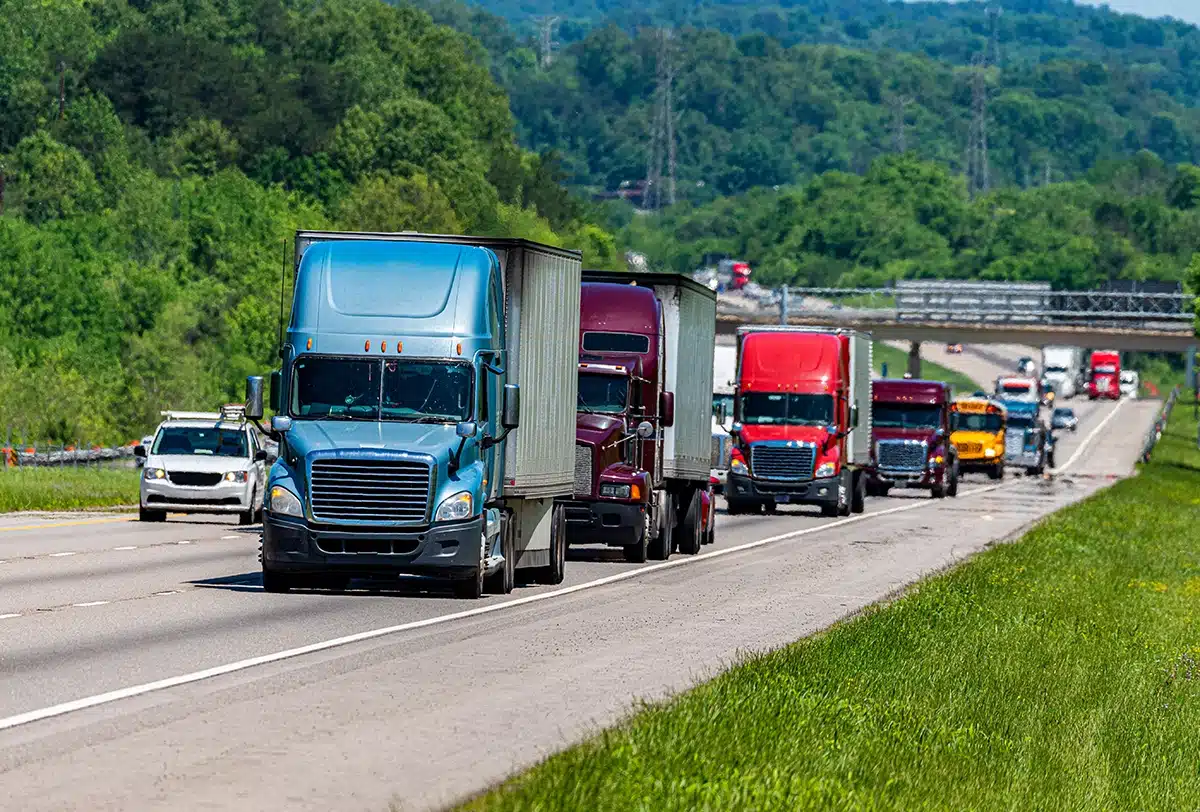
Human trafficking is happening throughout North America and has been reported in every U.S. and Mexican state, and in all Canadian provinces and territories. Human traffickers sell their victims in cities and rural areas, along our nation’s roadways, and at numerous locations and events. Because traffickers use our transportation systems, including commercial motor vehicles, to transport victims, it’s imperative that the law enforcement community and industry partners be involved in fighting this crime.
The enforcement and industry members of the Commercial Vehicle Safety Alliance’s (CVSA) Human Trafficking Prevention Program Committee have identified a challenge to enforcement’s ability to combat suspected instances of human trafficking roadside due to existing regulatory guidance. Currently, drivers are permitted to be accompanied by a non-driver passenger in the commercial motor vehicle, provided they have written authorization to do so by the motor carrier. However, due to the DOT Regulatory Guidance to §392.60 (Unauthorized persons not to be transported), drivers are not required to carry and produce the documentation. As a result, inspectors can have difficulty verifying whether or not a passenger found in a property-carrying CMV is authorized to be there, and therefore whether they may be the victim of human trafficking.
The passenger may be a victim and, if asked about their passenger status, may not be forthcoming about whether they are a willing passenger due to threats of force, fraud, coercion and/or grooming. An inspector’s ability to contact and confirm with the carrier that the passenger is authorized is limited by several factors, including the time of inspection being outside normal business hours, poor cell signal and/or being unable to reach the appropriate motor carrier employee with access to the information. Without access to the written authorization document, the inspector may be unable to verify the passenger’s status and could potentially miss an opportunity to intervene in a human trafficking incident.
To address this limitation, CVSA is requesting that FMCSA update the DOT Regulatory Guidance to §392.60 to read: “…the authorization, in either hard copy or electronic format, must be maintained on board the CMV as well as at the carrier’s principal place of business.”
Recent Comments