
DOT compliance is not just a trucking-company issue
Your company may not describe itself as a trucking company.
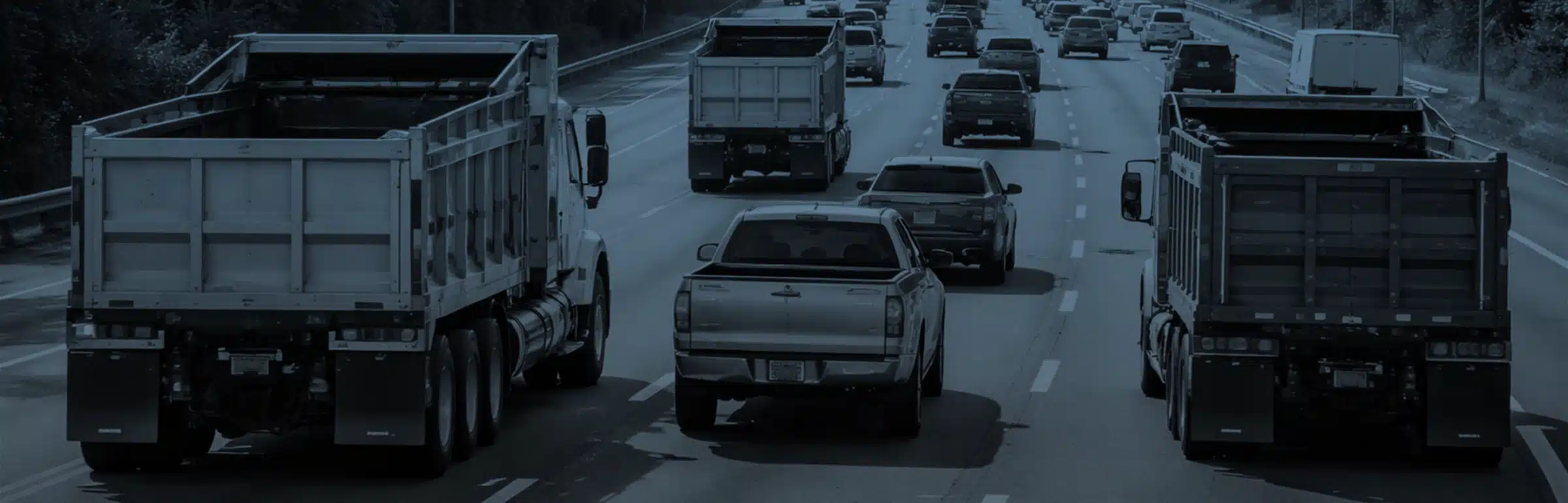
You might be a construction contractor with dump trucks and trailers. A utility company with service vehicles. A landscaping business with trucks hauling equipment. A manufacturer with delivery vehicles. A petroleum, agriculture, equipment rental, or passenger transport operation with commercial vehicles on the road every day.
But if your business operates vehicles that qualify as commercial motor vehicles, your compliance responsibilities may be larger than you realize.
That is where National Transportation Consultants helps.
NTCI works with trucking companies and non-trucking businesses that use CMVs to identify compliance gaps, organize safety processes, train employees, and build a practical path for maintaining compliance over time.
Do private fleets and non-trucking businesses need DOT compliance support?
Private fleets and non-trucking businesses may need DOT compliance support when their company vehicles qualify as commercial motor vehicles, operate in regulated commerce, transport passengers, haul hazardous materials, or require organized driver, vehicle, safety, and maintenance records. The issue is not whether trucking is your core business. The issue is whether your vehicles, drivers, cargo, and operating area create DOT/FMCSA or state compliance responsibilities.
Schedule a fleet-fit conversation.
Who this page is for
This page is for companies that operate a private fleet or company fleet but do not always think of fleet safety as their primary business.
That may include:
- Construction companies operating dump trucks, cement mixers, pickups with trailers, or equipment haulers
- Utilities and telecommunications companies with service vehicles and crews on the road
- Landscaping companies hauling equipment, materials, or crews
- Equipment rental companies delivering machinery, lifts, trailers, or jobsite equipment
- Manufacturing and distribution companies running local or regional delivery vehicles
- Agriculture businesses moving equipment, products, or supplies
- Petroleum, fuel, oilfield, and gas-related businesses operating specialized vehicles
- Passenger transportation organizations, including schools, colleges, private institutions, and shuttle operations
- Any business that uses CMVs as part of normal operations but does not see itself as a traditional motor carrier
The common thread is simple: if vehicles are used for business, the compliance question should not be ignored.
Why private fleet compliance gets overlooked
Private fleets often fall into a gray area inside the business.
Operations may handle vehicle schedules. HR may handle driver paperwork. Maintenance may handle inspections and repairs. Supervisors may handle training. Leadership may only see the fleet when something goes wrong.
That fragmented ownership can create problems.
A company may have safe intentions and responsible employees, but still struggle with:
- Incomplete driver qualification files
- Missing or outdated vehicle maintenance records
- Unclear responsibility for inspections, repairs, and documentation
- Confusion about whether a vehicle or trailer combination qualifies as a CMV
- Inconsistent safety training for drivers and supervisors
- Drug and alcohol program questions for CDL drivers
- Records that are stored in different systems, binders, inboxes, or branches
- Unclear preparation for roadside inspections or DOT/FMCSA reviews
- Limited visibility into recurring violations, trends, or process gaps
For private fleets, the biggest issue is often not unwillingness. It is ownership. No one person or department has been given a complete compliance process to follow.
The question is not, “Are we a trucking company?”
A better question is: “Do our vehicles, drivers, cargo, and operating area create compliance responsibilities?”
FMCSA guidance describes private motor carriers as businesses that transport their own cargo, usually as part of a company that produces, uses, sells, or buys the cargo being hauled. In other words, a company can be subject to motor carrier requirements even if hauling freight is not its primary service.
That distinction matters for companies that operate vehicles as a support function.
A contractor may use trucks to get crews and equipment to a jobsite. A manufacturer may deliver its own goods. A fuel-related business may transport materials tied to its operations. A utility company may run service vehicles every day without thinking of itself as a fleet business.
But from a compliance standpoint, the name of the industry is not the deciding factor. The operating details are.
Common DOT compliance areas private fleets should review
Every fleet is different, and the exact requirements depend on your operation. But private fleets and non-trucking businesses often need to review the following areas.
Vehicle classification and registration
The first step is understanding which vehicles are in scope.
That may include reviewing vehicle weight ratings, combined vehicle and trailer weights, passenger capacity, hazardous materials exposure, interstate travel, state-specific requirements, and whether a USDOT number or other registration obligations apply.
This is especially important for companies that have grown gradually. A business may start with a few pickups and later add trailers, larger trucks, or specialized vehicles without realizing that the compliance picture has changed.
Driver qualification files
Driver qualification files are a common source of compliance gaps because they often involve multiple departments.
A private fleet may have HR records, employment records, medical documentation, license checks, motor vehicle records, road test documentation, and safety acknowledgments spread across different systems.
NTCI can help companies review driver file processes and understand how driver qualification file management fits into a stronger fleet safety program.
Vehicle inspection, repair, and maintenance records
Private fleets often maintain vehicles responsibly but struggle to prove it clearly.
The issue is not only whether repairs happened. The issue is whether inspections, repairs, maintenance, and required documentation are organized and available when needed.
Companies should review whether they have a consistent process for vehicle records, inspection documentation, repair follow-up, annual inspections, and maintenance accountability.
Training and supervisor readiness
Drivers and supervisors need to understand the responsibilities that apply to the vehicles they operate and manage.
Training may need to cover topics such as roadside inspections, pre-trip and post-trip expectations, defensive driving, load securement, vehicle maintenance files, drug and alcohol responsibilities, and other fleet-specific safety topics.
NTCI provides on-site DOT safety training designed to fit real operations, not just generic classroom theory.
Drug and alcohol program responsibilities
If your company employs CDL drivers performing safety-sensitive functions, drug and alcohol program responsibilities may apply.
Private fleets can run into issues when the program exists on paper but responsibilities are not clearly owned. That can affect pre-employment processes, annual query processes, consent records, testing documentation, and return-to-duty record awareness.
NTCI can help private fleets understand, review, and organize drug and alcohol program oversight responsibilities as part of a broader safety program.
Roadside inspection and CSA/SMS visibility
Private fleets may not think about CSA/SMS until inspections, violations, insurance questions, or customer requirements bring them to the surface.
A single issue may point to a larger pattern: recurring vehicle defects, driver documentation gaps, maintenance follow-up problems, or inconsistent training.
NTCI helps companies look beyond the individual event and understand what the trend may be saying about the safety program.
Policy and process ownership
A private fleet does not need a complicated system for the sake of complexity. It needs a clear, practical process that the team can actually follow.
That includes knowing:
- Who owns driver file updates
- Who reviews vehicle maintenance records
- Who tracks training completion
- Who monitors inspection results
- Who responds when a compliance gap is found
- Who makes sure corrective actions are completed
- Who leadership can go to for a clear picture of fleet compliance
When these responsibilities are unclear, compliance becomes reactive. When they are documented and supported, the company has a better chance of staying ahead of problems.
How NTCI supports private fleets and company fleets
NTCI helps private fleets understand what applies, what is missing, and what should happen next.
That support may include:
- DOT compliance services to evaluate the current state of your fleet safety program
- Fleet safety managed services for companies that need ongoing support
- On-site DOT safety training for drivers, supervisors, and operations teams
- Driver qualification file management and review support
- Vehicle record and maintenance process review
- Safety program structure and process improvement
- Guidance from experienced transportation safety consultants
- Support for companies that need a scalable compliance function without building a full internal department
The goal is not to overwhelm your team with a generic binder of rules. The goal is to help you understand your actual exposure, organize the right records, and create a practical system that fits your vehicles, drivers, locations, and business model.
Built for businesses where fleet safety is important, but not the whole business
For many private fleets, the challenge is bandwidth.
Your team is already focused on customers, job schedules, field operations, production, delivery timelines, equipment availability, staffing, and profitability. Compliance may be important, but it competes with daily operational pressure.
That is why NTCI’s consultative approach matters.
You get access to experienced fleet safety professionals who understand how compliance requirements show up in the real world. NTCI’s consultants include former motor carrier enforcement officers and industry veterans, giving your team practical perspective on what needs attention and how to prioritize next steps.
This is especially valuable for companies that have outgrown informal processes.
A few vehicles may be manageable with simple internal oversight. But as the fleet grows, the business adds drivers, expands into new states, starts hauling different materials, purchases larger vehicles, or introduces trailers, the old way of managing compliance may no longer be enough.
Signs your private fleet may need compliance support
It may be time to schedule a conversation if:
- You are not sure which company vehicles qualify as CMVs
- Your driver files are incomplete, inconsistent, or hard to produce
- Maintenance records live in multiple locations or systems
- Supervisors are unsure what they should be reviewing
- You have had roadside inspection issues or repeat vehicle defects
- Your company is expanding its fleet, routes, services, or operating area
- You have CDL drivers and are unsure whether drug and alcohol records are being managed correctly
- Your leadership team wants clearer visibility into fleet safety responsibilities
- You do not have a dedicated internal safety department
- You want an outside expert to review your current process before a problem forces the issue
You do not need to know the answer before reaching out. That is the point of the conversation.
What happens in a fleet-fit conversation
A fleet-fit conversation helps determine what kind of support makes sense.
NTCI may ask about:
- Types of vehicles operated
- Vehicle weights and trailer combinations
- Number and type of drivers
- Operating area
- Passenger, hazardous materials, or specialized transport exposure
- Current driver qualification file process
- Maintenance and inspection recordkeeping
- Training responsibilities
- Recent inspections, violations, audits, or safety concerns
- Whether you need one-time review, training, or ongoing managed support
From there, NTCI can help identify the best next step.
For some companies, that may be a compliance review. For others, it may be managed services, training, DQ file support, or a broader transportation safety consulting conversation.
DOT compliance for private fleets should be practical
Private fleet compliance should not feel like a disconnected set of forms and requirements. It should support safer operations, clearer accountability, and better business continuity.
The right process helps your team know what to do, where records live, who owns each task, and how to respond when something changes.
That is the value of working with NTCI.
You get practical guidance from people who understand fleet safety, enforcement expectations, compliance documentation, and the operational pressure private fleets face every day.
Schedule a fleet-fit conversation
Not sure whether your company fleet has the right compliance structure in place?
NTCI can help you understand what applies, where gaps may exist, and what kind of support fits your business.
Schedule time to talk with National Transportation Consultants.
FAQs
Do private fleets need DOT compliance support?
Some private fleets do. The answer depends on the vehicles, drivers, cargo, operating area, and whether the company’s operations create DOT/FMCSA or state compliance responsibilities. A business does not have to be a traditional trucking company to have regulated fleet responsibilities.
What if trucking is not my core business?
That is exactly why this matters. Many construction, utility, landscaping, manufacturing, equipment rental, agriculture, petroleum, passenger transport, and service businesses operate vehicles as a support function. If those vehicles qualify as commercial motor vehicles or trigger other regulatory responsibilities, the company may still need a clear compliance process.
What records should private fleets review?
Private fleets should commonly review driver qualification files, vehicle inspection and maintenance records, training documentation, drug and alcohol program records where applicable, roadside inspection results, safety policies, and any records tied to DOT/FMCSA or state compliance responsibilities.
Can NTCI help if we are not sure which rules apply?
Yes. NTCI can help review your fleet situation, ask the right questions, and identify which services may fit your needs. The goal is to help your team move from uncertainty to a practical next step.
Is this page only for large fleets?
No. Private fleet compliance needs can exist at different sizes. The right level of support depends on the operation, vehicle types, drivers, risk exposure, and internal capacity. Some companies may need targeted review or training, while others may need ongoing fleet safety managed services.
Recent Comments